Margin
Invoice errors and price creep
A quiet $2 bump on a line you buy every week. Easy to miss until the quarter is already paid. The check can run as invoices land, so creep shows up while you can still ask for the credit.
 Minerva Logic
Usually in the retyping, the inbox grind, the systems that do not talk to each other.
I work with you to find the bottleneck. Then I build the custom fit. Then I stay until it is running smooth.
Owner-run shops. Real busywork. Start with the boring work that matters, fit the fix to how you already work, and stick with it through real use. Least friction can mean an existing tool. It can also mean something built for you.
Twenty minutes. No deck. If there is nothing worth building, I will say so.
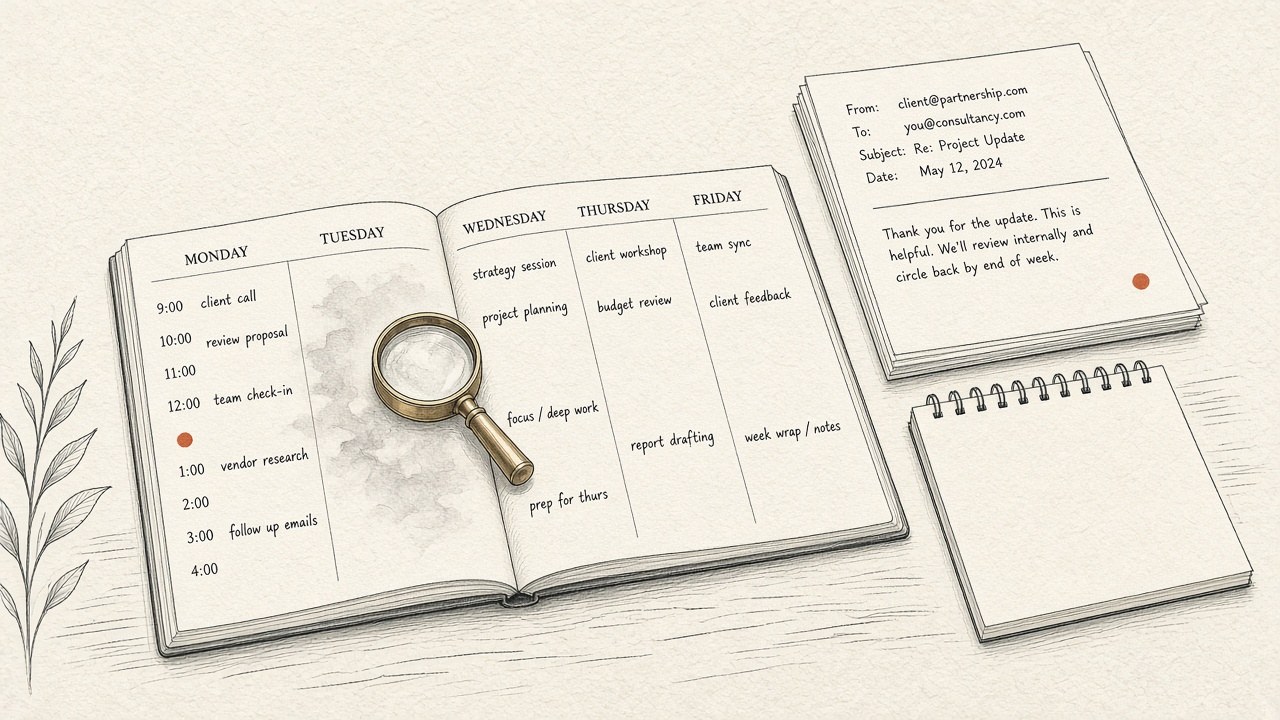
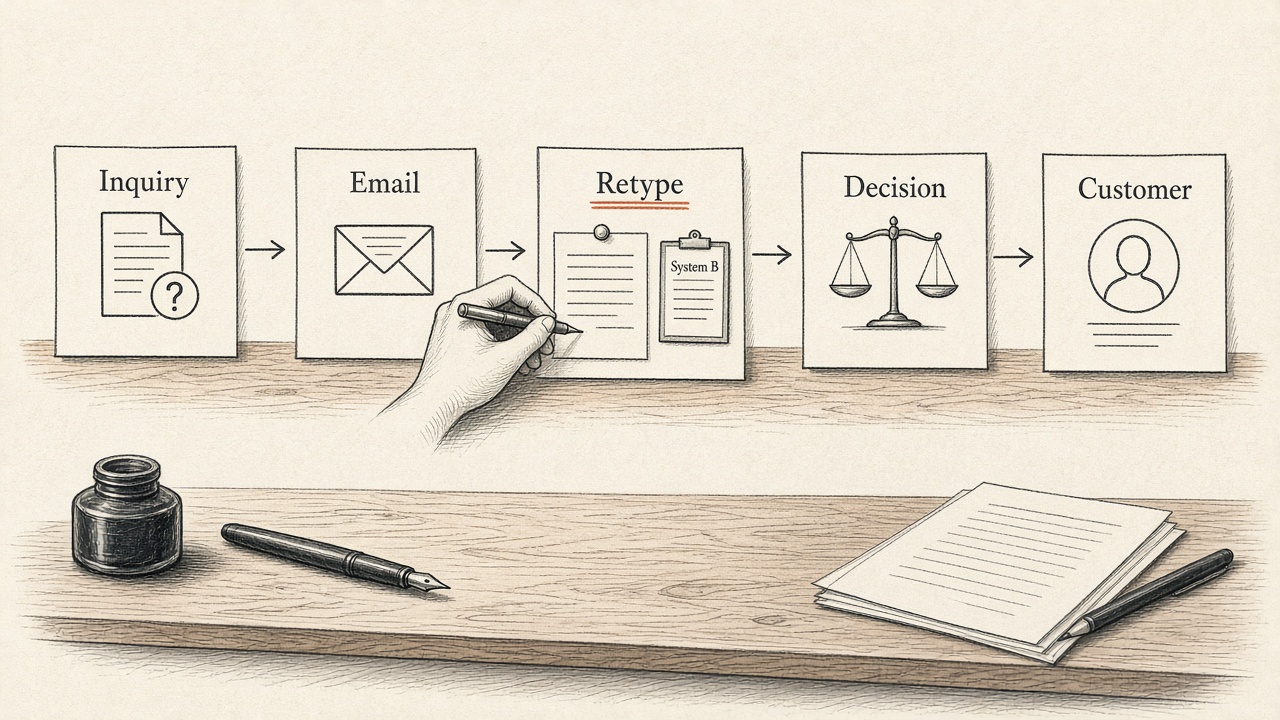
Inquiry lands. Someone opens it. Someone retypes it. Someone compares it. Someone chases it. That middle stretch is where Tuesday morning disappears. It rarely shows up on a project list because it feels like “just how we do things.”
▲ Friction usually hides in the middle of the job, not in the people doing it.
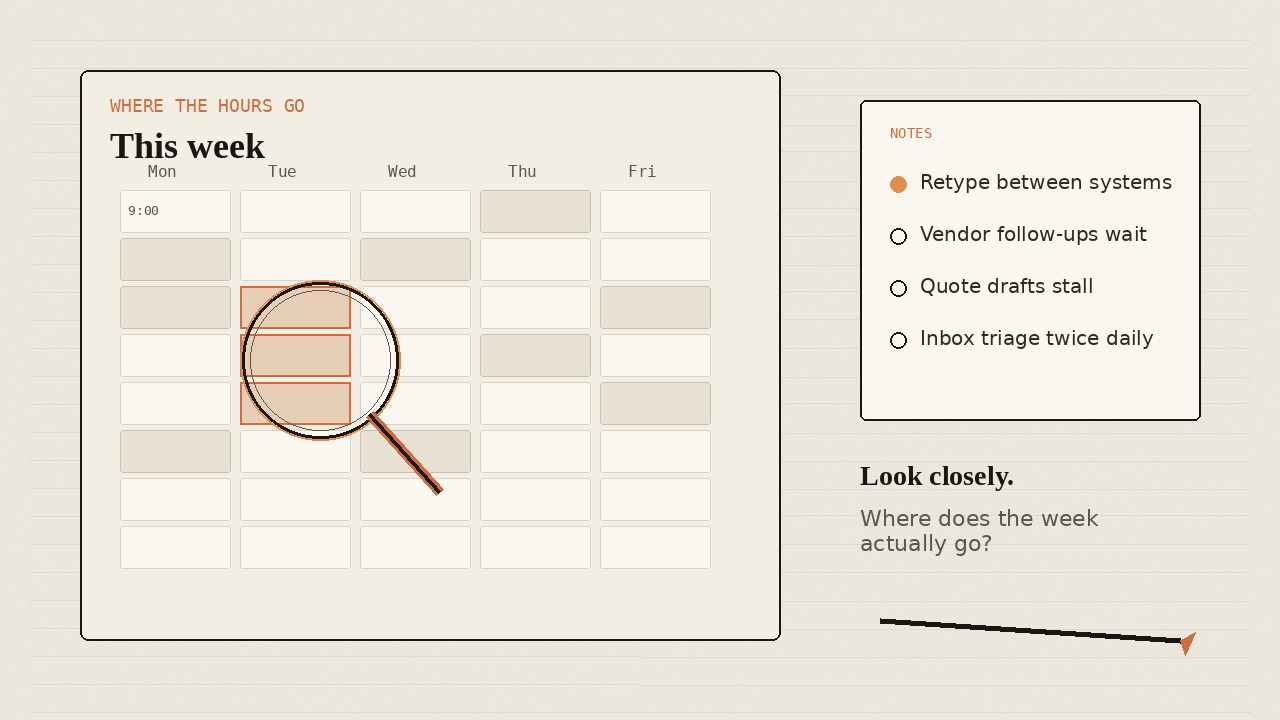
I am not here to remake the company. I look at where the hours go, name what is worth building first, and leave the rest alone for now. Sometimes the useful answer is to wait. A new model may drop this week; that only matters if it changes Tuesday morning for a shop that is already busy.
The fix fits the process you already have. Repeatable checking and chasing can run on their own. Calls that need a person still land with a person. On a normal Monday it shows up as a short brief: what needs a look, what can wait.
Before: Forty invoices a week. Open, compare, mark up, chase. Easy to miss a quiet price bump until month-end.
After: Monday you get the exceptions. What moved, by how much, and which ones look like they need a vendor note. You review the short list, not the whole pile.
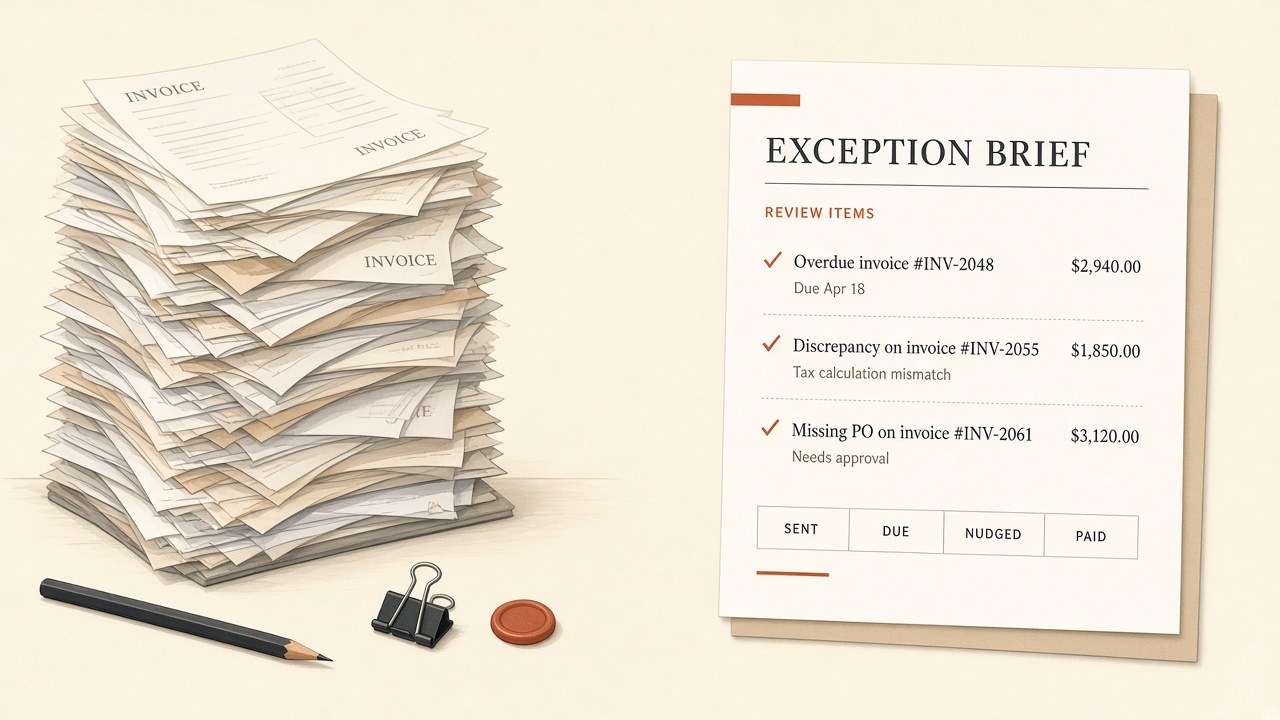
A quiet $2 bump on a line you buy every week. Easy to miss until the quarter is already paid. The check can run as invoices land, so creep shows up while you can still ask for the credit.

Inquiries sorted. Routine replies drafted. Twice a day you get a short brief instead of a stack.
A long contract lands. You get the clauses that changed, marked in plain English. You still make the call.
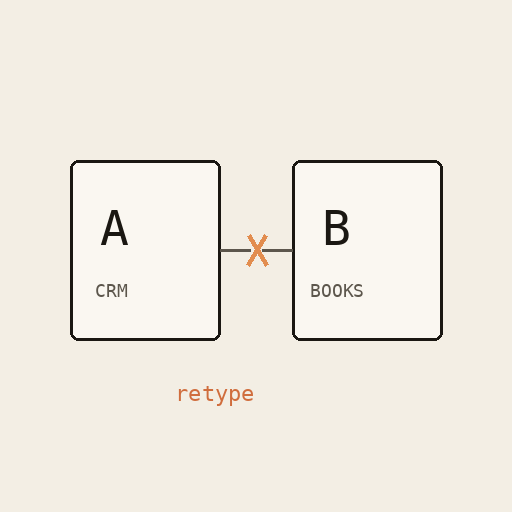
Something leaves one tool and gets typed into another. Same fields, same risk of a wrong digit, every time. That bridge is often where the week goes.
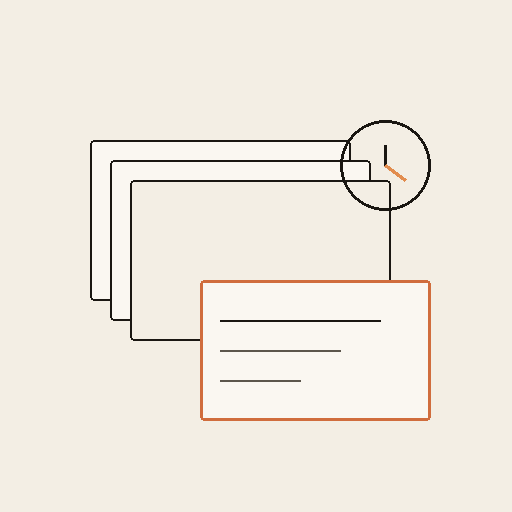
Quotes waiting on a reply. Invoices that need a nudge. Vendor questions parked in a thread. A quiet list so the ones that matter still get a look.
You already know the price and the scope. Getting it onto the page is the drag. A first draft from your usual language, then you edit and send.
We work together to name what is worth fixing first. Sometimes that is a place staff retype the same info; often it is somewhere else. For example, many businesses cannot keep up with their inbox. Here is one shape a fix can take once the bottleneck is clear: routine cases can draft themselves, odd ones still land with a person, and you keep the decision.

Minerva Logic is me, Craig Finch. After more than thirty years in software, I branched solo to help local owner-run shops put practical AI into workflows they already run, NY metro and remote. Deliberately small on purpose. I take the projects I can do well. I would rather refer you than overcommit. If we work together, you are working with me.
Email me a bit about the business and where time disappears. Or book the Fit Call / run the audit. I usually reply the same day.